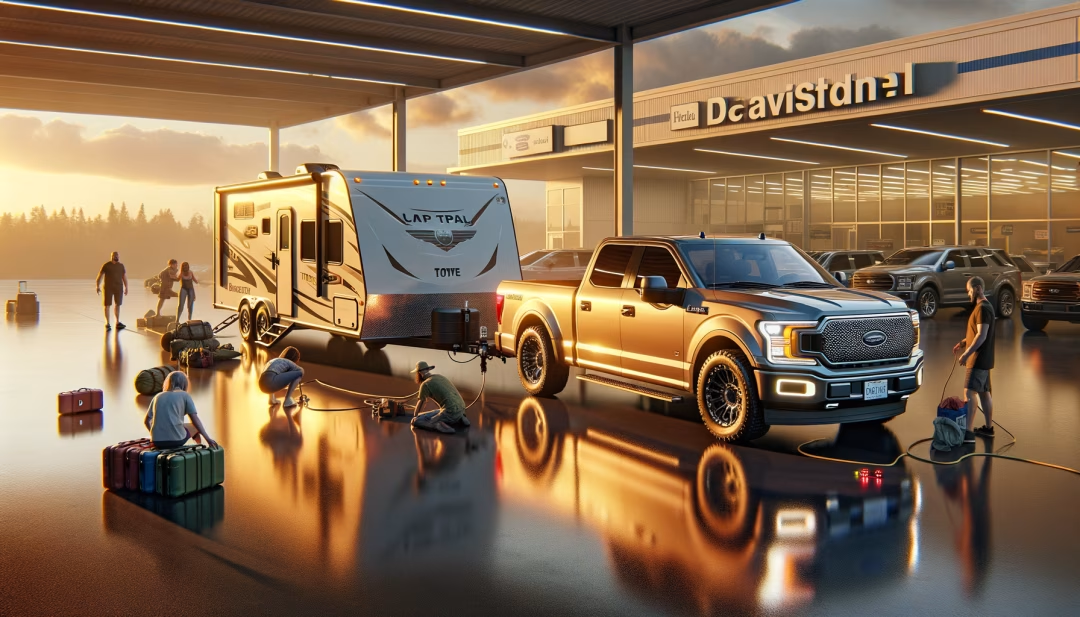
How to choose the best used vehicle for towing
Towing safely starts with numbers and hardware. Before you fall in love with a truck or SUV, confirm that its ratings and equipment match your trailer when fully loaded with gear, passengers, and fuel. Focus on these four pillars: towing capacity, payload, tongue weight, and GCWR. Then check for a factory tow package, correct hitch class, and a trailer brake controller. Finally, take a loaded or simulated test drive to evaluate braking, transmission behavior, and cooling performance.
Key towing terms explained
- Towing capacity - The maximum weight a vehicle can pull when properly equipped. Verify by VIN and tow package details.
- GCWR - Gross combined weight rating. The maximum allowed weight of the vehicle plus trailer and all cargo together.
- GVWR - Gross vehicle weight rating. The maximum allowed weight of the vehicle with passengers and cargo but without the trailer weight counted behind the hitch.
- Payload - How much weight the vehicle can carry inside or in the bed. Tongue weight counts against payload, so confirm you have margin for people and gear.
- Tongue weight - The downward force on the hitch. Typical safe range is 10 to 15 percent of trailer weight for conventional hitches. Weight distribution hitches can help balance load.
Tow package and hardware to look for
- Factory tow package - Often includes higher capacity cooling, alternator, wiring, hitch receiver, and sometimes gearing changes. Ask for proof via build sheet or VIN report. See used-car-vin-check-guide.
- Hitch class - Class III supports up to 5000 lb, Class IV up to 10000 lb, and Class V higher. Always confirm the specific hitch rating tag on the receiver and ball mount.
- Trailer brake controller - Required by law at certain trailer weights in many states. Integrated factory controllers work well and display gain settings in the dash.
- Axle ratio - Numerically higher gear ratios increase pulling strength and can raise rated capacity, especially in trucks. Confirm axle code and rating.
Top used vehicles for towing by category
Below are reliable and commonly available used trucks and SUVs that deliver strong tow performance when properly equipped. Always verify the capacity for the exact year, engine, axle ratio, and tow package on the vehicle you are considering.
Half ton pickups - balance, comfort, and strong ratings
- Ford F-150 2017-2020 - 3.5 EcoBoost or 5.0 V8 with Max Tow. Known for powerful torque and good cooling. Ratings vary widely by configuration.
- Chevrolet Silverado 1500 2016-2020 - 6.2 V8 or 5.3 V8 with Max Trailering Package. Solid frames and stable handling, strong payload when properly configured.
- Ram 1500 2019-2021 - 5.7 HEMI and eTorque versions tow well, smooth ride, available integrated brake controller and upgraded cooling.
- Toyota Tundra 2015-2020 - 5.7 V8, simple and durable setup. Ratings are competitive and reliability is a key strength.
Heavy duty pickups - go to for big campers and equipment
- Ford F-250 and F-350 2017-2020 - Gas 6.2 or 7.3, or Power Stroke diesel for serious torque. Great for trailers that push beyond half ton limits.
- Ram 2500 and 3500 2016-2020 - Cummins diesel options are torque leaders, coil rear suspension on 2500 improves ride, available exhaust brake enhances control on grades.
- Chevrolet Silverado and GMC Sierra 2500HD 2017-2020 - Duramax diesel and Allison transmission pairs are towing mainstays, stable under load.
Full size SUVs - power and passenger space
- Ford Expedition 2018-2021 - Twin turbo V6 with heavy duty tow package is a standout, independent rear suspension helps stability and comfort.
- Chevrolet Tahoe and Suburban 2016-2020 - 5.3 or 6.2 V8, proven frames, strong aftermarket support for hitches and brake controllers.
- Toyota Sequoia 2016-2021 - 5.7 V8 delivers dependable tow power, straightforward mechanics and good long term durability.
- Nissan Armada 2017-2020 - Robust V8, comfortable interior, solid tow ratings with the right equipment.
Midsize trucks and capable crossovers - lighter loads, big value
- Toyota Tacoma 2016-2021 - With tow package, suitable for small campers or utility trailers. Prioritize payload and cooling upgrades where equipped.
- Chevrolet Colorado and GMC Canyon 2017-2020 - V6 or diesel options tow well for the class, diesel offers great control and efficiency under load.
- Ford Ranger 2019-2021 - Turbo four with strong torque, proper gearing, and factory tow package delivers confident towing for midsize needs.
- Dodge Durango and Jeep Grand Cherokee 2016-2020 - With V6 or V8 and tow package, both deliver 6200 to 7400 lb typical ratings, great for mixed family and tow duty.
- Toyota 4Runner 2016-2021 - Body on frame durability, 5000 lb typical rating, excellent off road manners for trailering to campsites.
Vans and specialty options
- Ford Transit 150-350 - Configurable payload and tow ratings, good choice for contractors who tow and need enclosed cargo space.
- Chevrolet Express and GMC Savana - Proven V8 powertrains, simple and rugged, strong tow ratings with the right axle and cooling.
How to match a used tow vehicle to your trailer
Start with your heaviest realistic trip weight, not the empty brochure number. Add water, fuel, food, tools, bikes, coolers, passengers, and pet gear. Then estimate tongue weight at 10 to 15 percent for conventional trailers. If that tongue weight plus people and cargo exceeds the truck payload, move up a class or reduce load.
- Confirm GCWR margin - Your combined weight should sit below GCWR with a healthy buffer for grades, heat, and headwinds.
- Check axle ratio - Many trucks show higher ratings with 3.55, 3.73, or 4.10 gears. Verify the door jamb code or axle tag.
- Cooling and brakes - Look for upgraded radiators, transmission coolers, and integrated trailer brake controllers to help on hills and hot days.
Used tow vehicle inspection checklist
A careful inspection can prevent tow related issues later. If possible, have a trusted technician evaluate the vehicle on a lift. You can schedule-service to arrange a pre purchase inspection and tow hardware check.
- Evidence of towing - Inspect hitch receiver, wiring, and frame rails for damage, rust, or amateur welds. Check for a weight distribution setup if needed for heavier trailers.
- Transmission health - Review service history for fluid changes, watch for shudder or delayed engagement. Long tows stress heat management, so healthy ATF and cooling are critical.
- Cooling system - Inspect the radiator, auxiliary coolers, fans, and belts. Overheating under load is a red flag for tow duty readiness.
- Brakes and tires - Confirm pad thickness, rotor condition, and that tires are load rated appropriately with good tread and recent date codes.
- Suspension and steering - Look for worn bushings, leaks in shocks or struts, and excessive play. Air leveling or heavy duty springs can help stability if equipped.
Gas vs diesel for towing
Gas engines are simpler and usually cost less to buy and maintain. They are a smart choice for weekend towing and lighter to medium loads. Diesel engines make more low rpm torque, which helps with heavy trailers, long grades, and hot climates. Diesels often carry higher purchase and maintenance costs but can deliver improved control and efficiency under load. Match the engine to your trailer weight, distance, and frequency of trips, not just the maximum number on paper.
Financing, trade in, and protection plans
A realistic towing budget includes the vehicle, hitch and wiring upgrades, brake controller, tires, and possibly suspension or cooling service. For planning, review payment-options and applications. If you have a current vehicle, get a quick estimate on value-my-trade. You can also explore extended-warranty-for-used-cars and used-car-gap-insurance-explained to understand protection choices for high load use.
Test driving for towing confidence
During a test drive, focus on transmission shifts, brake feel, steering stability, and engine temperature. If possible, simulate load with passengers and cargo or test with a small trailer under supervision. Note grades, crosswinds, and stop and go traffic. Ask to confirm tow package content on the build sheet. If you want a structured drive plan, see schedule-a-test-drive and used-car-inspection-checklist.
Related research and shopping
Explore used-inventory to see current availability of trucks and SUVs with tow packages. For deeper comparisons and niche needs, see best-used-trucks, best-used-suvs, best-used-trucks-for-work, best-used-vehicles-for-towing-boats, and best-used-vehicles-for-hauling. Learn buying basics at how-to-buy-a-used-car, used-car-buying-checklist, and certified-pre-owned-vs-used. For questions or guidance, visit contact-us or meet-our-staff.
Frequently asked questions about used vehicles for towing
Add your trailer dry weight plus cargo like water, fuel, food, tools, and bikes to estimate real trip weight. Then add tongue weight at 10 to 15 percent. Choose a vehicle with a rated capacity that exceeds this number and leaves a safe buffer for heat, grades, and wind.
Often yes, if the trailer is within limits and the truck has a proper tow package, correct axle ratio, and adequate payload for tongue weight and passengers. Verify exact ratings by VIN and leave margin. If payload is tight, consider a heavy duty model or lighter trailer.
Many states require trailer brakes above a certain trailer weight, so a controller is important and may be legally required. A weight distribution hitch is recommended when tongue weight is high relative to payload or for longer trailers to improve stability and steering control.
Review transmission service records, check cooling system and auxiliary coolers, inspect hitch and wiring for damage, verify axle ratio and tow package, examine brakes and tires for load rating, and test drive to confirm smooth shifts and stable braking under simulated load.
Diesel is great for heavy trailers, mountains, and frequent long distance towing due to torque and engine braking. Gas is often more affordable and simpler to maintain for moderate loads or occasional trips. Choose based on trailer weight, trip frequency, and budget.
Helpful links
About this guide
Our goal is to give shoppers a clear path to the best used vehicles for towing with practical numbers and inspection tips. For brand comparisons, ownership costs, and safety insights, visit blog, research-page-template, most-reliable-used-trucks, used-vehicles-with-best-warranty-coverage, and used-cars-with-best-resale-value. If you need store details or policies, see locations, about-us, visitor-agreement, privacy-policy, and terms.